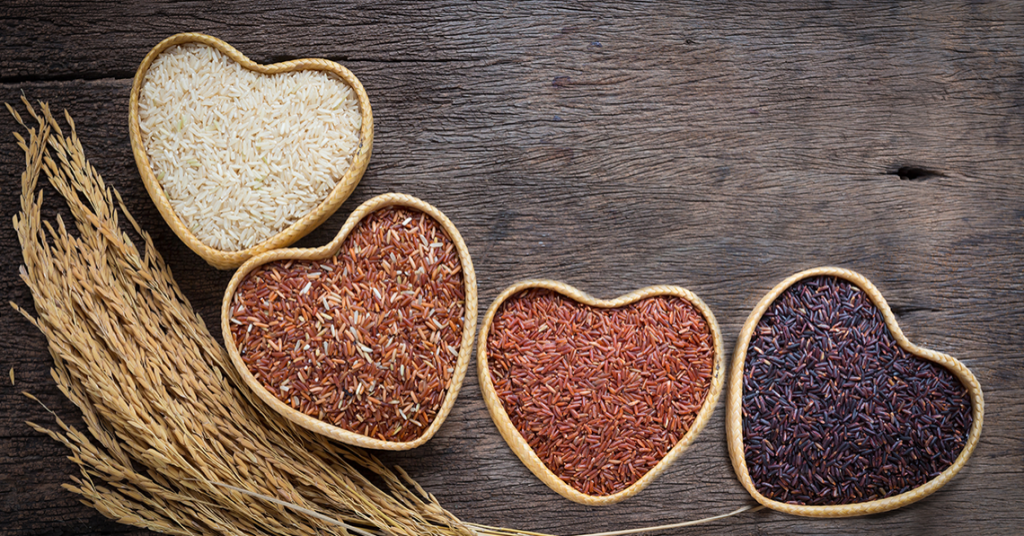
The 4 classifications of Thai Rice Thai Hom Mali RiceThai Hom Mai 105 (Khao Dawk Mali 105)It is a rice strain that has a pandanus-like aroma. It is well-grown in Thailand and it makes Thai rice an export product known worldwide. Thai Hom Mali 105 is originated in Chachoengsao Province, it has been developed from White Dawk Mali rice Which is the native rice found and known in Bang Khla District Chachoengsao. With its distinctive features when cooking, the smell is aromatic, unlike any rice varieties in the world. Thung Kula Jasmine RiceThung Kula Jasmine Rice comes from the world’s best jasmine rice source that is the largest flat territory in the northeast which we call “Thung Kula Rong Hai”. It is a long, slender and seedy grain. The grain that has already been polished will be shiny. It is soft and has sweet-smelling scent when it is cooked. Glutinous RiceGlutinous Rice RD6Glutinous Rice RD6 is characterized by long, slender seeds, brown bark seeds with short hairs. It is a type of fragrant glutinous rice, sensitive to light. It has been developed from Khao Dawk Mali 105 rice. Glutinous Rice RD6 is a species that is popularly grown in the north and northeast and It is the sticky rice that gives the highest average yield. Khao Wong Kalasin Glutinous RiceIt is sticky rice grown in the area of Khao Wong district, Kuchinarai District (only in Natho Sub-district And Nong Hang Sub-district) and Na Khu district (only in Na Khu Subdistrict and Bo Kaeo Subdistrict), Kalasin Province which is an area with high calcium and silicon, cold air. As a result, Khao Wong Kalasin glutinous rice is very soft and fragrant. When steamed, it is fragrant and soft and the softness will last for hours if we store it in closed containers. Khao Niew Kiew Ngoo (Glutinous Rice)It is one of Glutinous species, a traditional native rice with a beautiful, slender and small seed. When steamed, cooked, the rice is white. The texture is soft and fragrant. It is used to make some Thai desserts such as Mango sticky rice, Durian sticky rice, Khao Lam (sticky rice soaked in coconut milk and baked in a length of bamboo), etc. Black Glutinous Rice The grain is purple-black and quite hard for chewing but popularly used to make sweets more than other rice. It is also helping to prevent heart disease, reduce cholesterol and inhibit the growth of cancer. White RiceKhao Leuang Patew ChumphonIt is the traditional rice of Patew District, Chumphon Province, harvested in December. There are a lot of grain per ear of rice. It is suitable for planting in acid soil and also resistant to insect diseases. The seed is in yellow color, long shiny grain. Chumphon farmers tend to grow Because it is easy to grow this type of rice because of the productivity and suitable areas and weather conditions. Khao Jek Chuey Sao HaiGood quality local rice of Sao Hai district, Saraburi province. It was named after the rice trader, a Cinese-Thai merchant named “Jek Chuey”, who bring this species of rice into the area. This species is well-known for centuries since the beginning of the Rattanakosin period. It is also good and suitable to be used to produce sweets and kind of pasta. Organic RiceBrown riceBrown rice or Coarse rice or Red rice. The rice milled by milling machines to slightly remove the rice husk but keep the part of rice germ and rice bran. Brown rice has a higher fiber 3-7 times than white rice. Eating brown rice, we will get fiber together with all kinds of nutrients that are very beneficial. And the fiber in brown rice also makes you feel full longer than eating white rice. Riceberry RiceIt is the success of rice species improvement of Assoc. Prof. Dr. Apichat and a team of researchers from the Rice Research Center Kasetsart University with the cooperation from the National Research Council (NRCT), which is a cross-breeding between Aromatic Black rice and Khao Dawk Mali 105. This rice variety has been registered as a new plant variety. It is a deep purple rice with a slender and shiny appearance similar to berries. Because of the partial polishing, when it cooked, we can taste the sticky texture with fragrant flavor and smell the unique aroma. This special purple rice species can be grown throughout the year. Khao Mun Poo (Red Rice)Chinese people call this type of rice “Red Rice”. It has a reddish-brown rice crust, classified as one of Brown rice or Coarse rice with the same amount of fat as brown rice which is twice as high as polished rice. There is a substance called keratin that is converted to vitamin A which is higher than polished rice as well. When it cooked, the rice is light pink, sweet-smelling, soft and beautiful. Sangyod Rice Phatthalung (Sangyod GI Rice)Rice that originated in Phatthalung Province which has a small seed, the seed coat is red to dark red. When cooked, the grain will be soft and stick together. Sangyod rice has higher nutritional value than other varieties of rice with high fiber, helping to slow down aging. It is useful in nourishing the blood, preventing memory loss and helping reduce the risk of cancer.